 Opening hours:
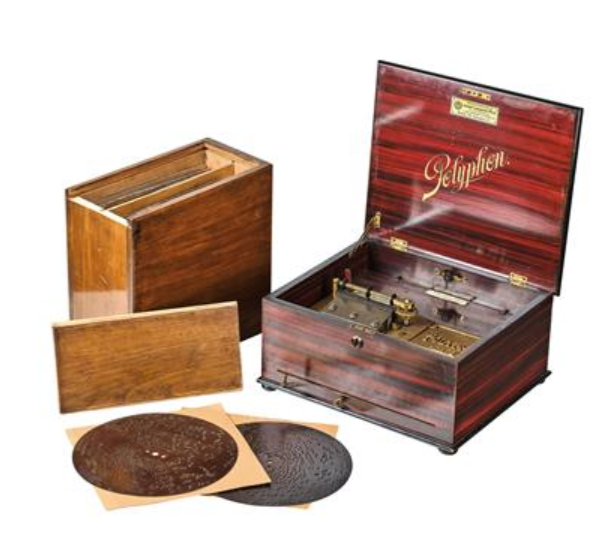
During the 19th century, inventors and clockmakers created sophisticated mechanical systems that produced music without a musician.
The earliest versions used pinned cylinders, where small metal pins stored a melody.
As the cylinder rotated, the pins activated metal tongues or mechanical levers to produce tones.
Later systems used perforated discs and punched paper rolls to store musical information.
These mechanical memories controlled music boxes, barrel organs, orchestrions and early music machines.
Many of these devices were placed in salons, fairs and public venues.
They could automatically play complete musical pieces again and again.
The technology combined precision engineering with musical entertainment.
Mechanical music machines became important precursors of later sound carriers.
For the first time they demonstrated that music could be stored and reproduced.
This development laid the foundation for the phonograph, gramophone and modern audio technology.