 Opening hours:
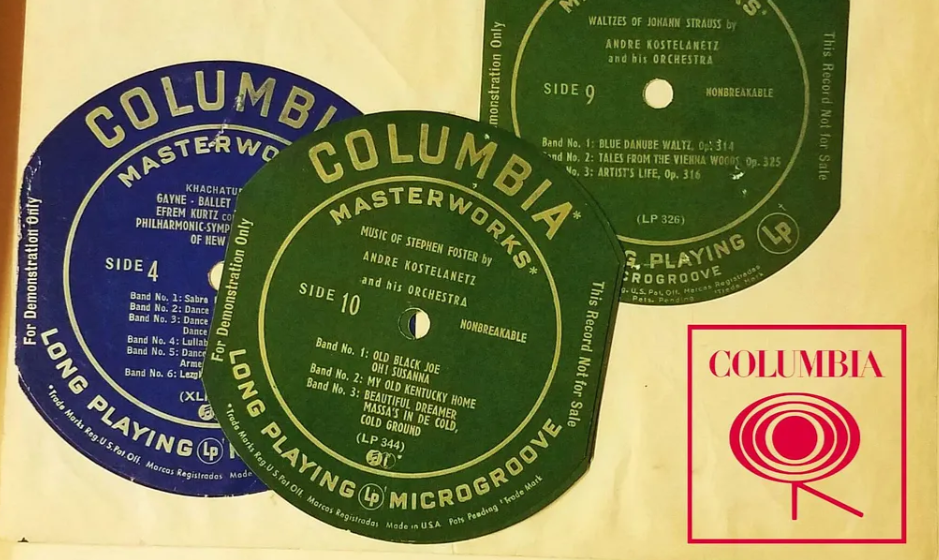
The long-playing record (LP) is introduced in 1948 by Columbia Records.
It is made from vinyl, a material that is more durable and quieter than the previously used shellac.
LPs rotate at 33⅓ revolutions per minute.
Thanks to the finer microgroove technology, much more music can be stored.
A typical LP can hold about 20 to 25 minutes of music per side.
For the first time, complete albums or longer works can be released on a single record.
The sound quality is significantly improved with less surface noise.
The LP quickly becomes the standard format for music recordings.
It is especially popular in jazz, classical music and later pop and rock.
For several decades, the LP remains the dominant medium of the music industry.
It strongly shapes the music culture of the 20th century.